

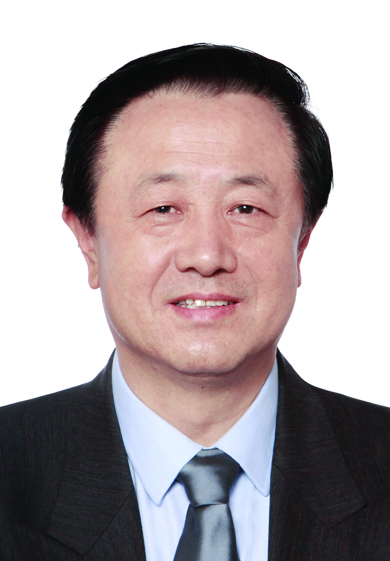
Qiuming Cheng received his PhD in Earth Science from the University of Ottawa in 1994. After a postdoctoral year at the Geological Survey of Canada, he became a professor with cross-appointments at York University, Toronto. He is currently a professor at China University of Geosciences (Beijing) , leading the State Key Laboratory of Geological Processes and Mineral Resources and the Deep-time Digital Earth Frontiers Science Center. His research focuses on developing mathematical geocomplexity theories to model nonlinear geo-processes and quantitatively predict mineral resources. His pioneering work on fractal density theory and local singularity analysis has impacted geoscientific disciplines concerned with extreme geological events arising from nonlinear plate tectonics—such as magmatism, earthquakes, and mineralization. His work on geochemical anomaly recognition using fractal methods opened a new field in exploration and environmental geochemistry; his paper is among the most cited in the field. Professor Cheng has received the Krumbein Medal (IAMG, 2008) and the AAG Gold Medal (AAG, 2020) . He served as President of IAMG (2012–2016) and IUGS (2016–2020) , during which he initiated the Deep-time Digital Earth (DDE) Big Science Program. He holds the UNESCO Chair on DDE and Mineral Resources and is an Academician of the Chinese Academy of Sciences, a Foreign Member of Academia Europaea (AE) , and a Fellow of the International Science Council (ISC) .
Professor Cheng's keynote introduces the DDE Big Science Program and emphasizes Scientific Foundation Models (SFMs) as a new paradigm that integrates Big Data and AI to learn the intrinsic laws of Earth systems, moving beyond traditional process-based geochemistry. He outlines how AI-driven frameworks are revolutionizing mineral prospectivity mapping and acting as co-creators for hypotheses and experiments, while urging the geochemistry community to adopt FAIR data principles and participate in developing next-generation foundation models.