
Keynotes
-
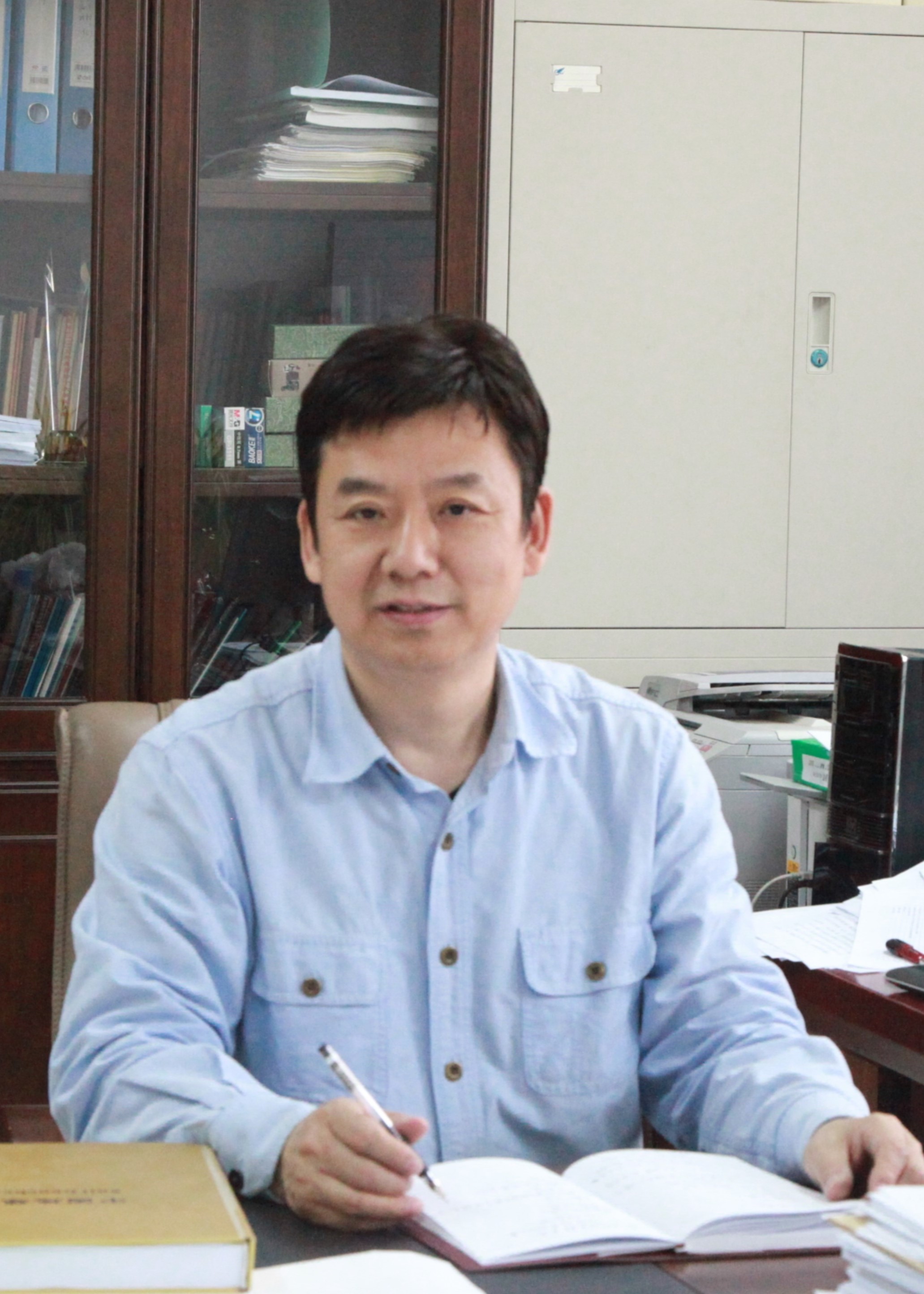
![]() Xueqiu Wang —— AAG Gold Medal AwardeeProf. Xueqiu Wang works as a geochemist, senior geochemists and research fellow at the IGGE since 1989. He has 37-year experience in exploration geochemistry, geochemical mapping and global geochemical baselines at the Institute of Geophysical and Geochemical Exploration (IGGE). His research led to discovery of 16 large gold and 4 rare earth element deposits. He has published 2 books and 323 papers with 10742 citations. He was awarded for the National-class Scientific Talent of the New Century National Hundred, the Thousand and Ten Thousand Talent Project of China in 2004,the 70th Anniversary Commemorative Medal of the Founding of the People's Republic of China in 2019, the China National Prize for Science and Technology Progress Award in 2012, the First Prize of the Ministry of Natural Resources in 2021, the Li Siguang Prize, which is the highest honor of geology in China awarded by the Li Siguang Prize Committee, the AAG Gold Medal in 2026. He, as a professor at both academy and un...
Xueqiu Wang —— AAG Gold Medal AwardeeProf. Xueqiu Wang works as a geochemist, senior geochemists and research fellow at the IGGE since 1989. He has 37-year experience in exploration geochemistry, geochemical mapping and global geochemical baselines at the Institute of Geophysical and Geochemical Exploration (IGGE). His research led to discovery of 16 large gold and 4 rare earth element deposits. He has published 2 books and 323 papers with 10742 citations. He was awarded for the National-class Scientific Talent of the New Century National Hundred, the Thousand and Ten Thousand Talent Project of China in 2004,the 70th Anniversary Commemorative Medal of the Founding of the People's Republic of China in 2019, the China National Prize for Science and Technology Progress Award in 2012, the First Prize of the Ministry of Natural Resources in 2021, the Li Siguang Prize, which is the highest honor of geology in China awarded by the Li Siguang Prize Committee, the AAG Gold Medal in 2026. He, as a professor at both academy and un... -
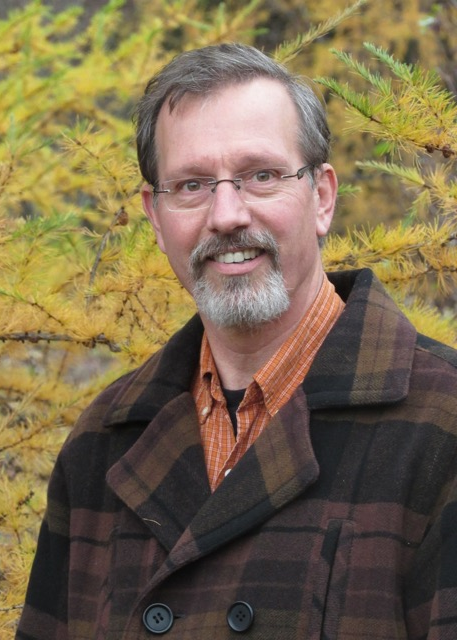
![]() Cliff Stanley —— AAG Gold Medal AwardeeCliff Stanley Biography After acquiring a Geology BA (‘80) from Dartmouth College, and MSc (‘84) and PhD (’88) from the University of British Columbia, Cliff Stanley served in several post-graduate research posts, at the University of Calgary studying numerical metamorphic petrology, at Queen’s University studying applied geochemistry, and as Adjunct Professor in economic geology at the Mineral Deposit Research Unit at UBC. In 1998, Cliff moved to the Department of Earth and Environmental Science at Acadia University in Nova Scotia as a professor of applied geochemistry. He has research interests involving numerical applications in geochemistry and petrology applied to exploration geochemistry and mineral exploration, amongst other topics. He is best known as the author of numerous publications illustrating the application of molar element ratio analysis to lithogeochemical data, and received the Chayes Prize from the Association of Mathematical Geoscientists in recognition of tho...
Cliff Stanley —— AAG Gold Medal AwardeeCliff Stanley Biography After acquiring a Geology BA (‘80) from Dartmouth College, and MSc (‘84) and PhD (’88) from the University of British Columbia, Cliff Stanley served in several post-graduate research posts, at the University of Calgary studying numerical metamorphic petrology, at Queen’s University studying applied geochemistry, and as Adjunct Professor in economic geology at the Mineral Deposit Research Unit at UBC. In 1998, Cliff moved to the Department of Earth and Environmental Science at Acadia University in Nova Scotia as a professor of applied geochemistry. He has research interests involving numerical applications in geochemistry and petrology applied to exploration geochemistry and mineral exploration, amongst other topics. He is best known as the author of numerous publications illustrating the application of molar element ratio analysis to lithogeochemical data, and received the Chayes Prize from the Association of Mathematical Geoscientists in recognition of tho... -
![]() Matthew LeybourneMatthew Leybourne has a BSc from Waikato University, New Zealand and MSc and PhD degrees from Acadia University and the University of Ottawa, Canada, respectively. He has worked in government (Geological Survey of Canada, GNS Science), Industry (ALS Geochemistry) and academia (University of Texas at Dallas, Laurentian University, and presently at Queen’s University). He is the Co-Director of the Queen’s Facility for Isotope Research (QFIR). His research and that of his student’s focuses on the geochemistry of fluids associated with ore deposits. They are specifically interested in the fluids that formed various styles of mineralization, hypogene dispersion of elements into host rocks, supergene processes, and using modern fluids for mineral exploration (groundwaters, soils, till). They use a variety of geochemical tools, with an emphasis on trace metals, metalloids and stable, radiogenic, and non-traditional isotopes. To understand the chemistry of ore deposits and how best to explor...
Matthew LeybourneMatthew Leybourne has a BSc from Waikato University, New Zealand and MSc and PhD degrees from Acadia University and the University of Ottawa, Canada, respectively. He has worked in government (Geological Survey of Canada, GNS Science), Industry (ALS Geochemistry) and academia (University of Texas at Dallas, Laurentian University, and presently at Queen’s University). He is the Co-Director of the Queen’s Facility for Isotope Research (QFIR). His research and that of his student’s focuses on the geochemistry of fluids associated with ore deposits. They are specifically interested in the fluids that formed various styles of mineralization, hypogene dispersion of elements into host rocks, supergene processes, and using modern fluids for mineral exploration (groundwaters, soils, till). They use a variety of geochemical tools, with an emphasis on trace metals, metalloids and stable, radiogenic, and non-traditional isotopes. To understand the chemistry of ore deposits and how best to explor... -
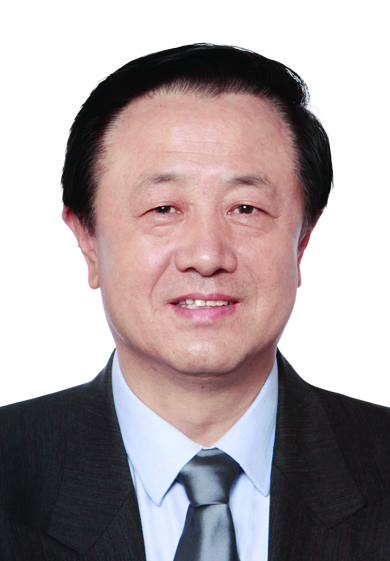
![]() Qiuming ChengQiuming Cheng received his PhD in Earth Science from the University of Ottawa in 1994. After a postdoctoral year at the Geological Survey of Canada, he became a professor with cross-appointments at York University, Toronto. He is currently a professor at China University of Geosciences (Beijing) , leading the State Key Laboratory of Geological Processes and Mineral Resources and the Deep-time Digital Earth Frontiers Science Center. His research focuses on developing mathematical geocomplexity theories to model nonlinear geo-processes and quantitatively predict mineral resources. His pioneering work on fractal density theory and local singularity analysis has impacted geoscientific disciplines concerned with extreme geological events arising from nonlinear plate tectonics—such as magmatism, earthquakes, and mineralization. His work on geochemical anomaly recognition using fractal methods opened a new field in exploration and environmental geochemistry; his paper is among the most cite...
Qiuming ChengQiuming Cheng received his PhD in Earth Science from the University of Ottawa in 1994. After a postdoctoral year at the Geological Survey of Canada, he became a professor with cross-appointments at York University, Toronto. He is currently a professor at China University of Geosciences (Beijing) , leading the State Key Laboratory of Geological Processes and Mineral Resources and the Deep-time Digital Earth Frontiers Science Center. His research focuses on developing mathematical geocomplexity theories to model nonlinear geo-processes and quantitatively predict mineral resources. His pioneering work on fractal density theory and local singularity analysis has impacted geoscientific disciplines concerned with extreme geological events arising from nonlinear plate tectonics—such as magmatism, earthquakes, and mineralization. His work on geochemical anomaly recognition using fractal methods opened a new field in exploration and environmental geochemistry; his paper is among the most cite... -
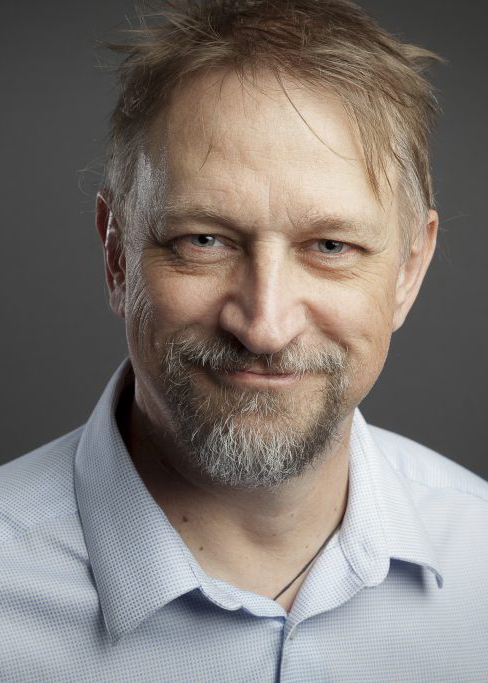
![]() Anna LadenbergerAnna Ladenberger is a senior geochemist at the Geological Survey of Sweden (since 2008). She received her PhD in 2006 from the Jagiellonian University, Krakow, Poland in the field of isotope geochemistry. She has worked with isotope geochemistry of volcanic rocks and Pb-U geochronology in the Scandinavian Caledonides and then moved into the low temperature geochemistry with focus on geochemical mapping using various sample types (soil, till, plants, water) and methods (acid leach, total concentrations and isotopic systems). She has been involved in projects focusing on critical raw materials in black shale and in mining waste, e.g. EU Horizon FUTURAM.She is a chairman of the Geochemistry Expert Group at EuroGeoSurveys in Brussels (since 2026), and a member of Advisory Board at the Steering Committee of the ‘IUGS Commission on Global Geochemical Baselines’. Recently she joined the Council and the Academic Committee of the UNESCO International Centre on Global-Scale Geochemistry. She...
Anna LadenbergerAnna Ladenberger is a senior geochemist at the Geological Survey of Sweden (since 2008). She received her PhD in 2006 from the Jagiellonian University, Krakow, Poland in the field of isotope geochemistry. She has worked with isotope geochemistry of volcanic rocks and Pb-U geochronology in the Scandinavian Caledonides and then moved into the low temperature geochemistry with focus on geochemical mapping using various sample types (soil, till, plants, water) and methods (acid leach, total concentrations and isotopic systems). She has been involved in projects focusing on critical raw materials in black shale and in mining waste, e.g. EU Horizon FUTURAM.She is a chairman of the Geochemistry Expert Group at EuroGeoSurveys in Brussels (since 2026), and a member of Advisory Board at the Steering Committee of the ‘IUGS Commission on Global Geochemical Baselines’. Recently she joined the Council and the Academic Committee of the UNESCO International Centre on Global-Scale Geochemistry. She... -
![]() Alexander SeyfarthAlexander Seyfarth is an x-ray spectroscopist with over 30 years of experience with XRF and XRD. Alexander holds a Diploma in Mineralogy from University Giessen (1996). Thesis work for his graduate studies was done on chemical and phase investigation of kiln deposits using XRF, EPMA, and XRD as well as Rietveld structure refinement on isolated phases.Starting out as Application Scientist in Germany with Siemens, he was transferred to the US where is now a proud citizen, still living in the Midwest (Wisconsin). As the resident “Geo Scientist” he got to travel within the Americas to mine sites, cement plants and quarries and present application and theory based talks at trade shows, conferences for Bruker and Thermo Fisher Scientific in various functions.(1997-2016). With a group of other XRF trainers he continued the XRF course from University of Western Ontario and moved it to Hamilton College and now merged it with the ICDD training offering in the advanced XRF course; This is the o...
Alexander SeyfarthAlexander Seyfarth is an x-ray spectroscopist with over 30 years of experience with XRF and XRD. Alexander holds a Diploma in Mineralogy from University Giessen (1996). Thesis work for his graduate studies was done on chemical and phase investigation of kiln deposits using XRF, EPMA, and XRD as well as Rietveld structure refinement on isolated phases.Starting out as Application Scientist in Germany with Siemens, he was transferred to the US where is now a proud citizen, still living in the Midwest (Wisconsin). As the resident “Geo Scientist” he got to travel within the Americas to mine sites, cement plants and quarries and present application and theory based talks at trade shows, conferences for Bruker and Thermo Fisher Scientific in various functions.(1997-2016). With a group of other XRF trainers he continued the XRF course from University of Western Ontario and moved it to Hamilton College and now merged it with the ICDD training offering in the advanced XRF course; This is the o...