

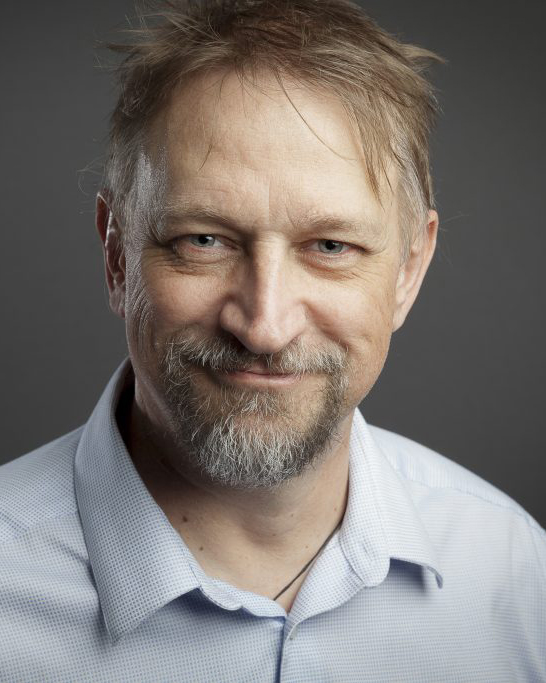
Matthew Leybourne has a BSc from Waikato University, New Zealand and MSc and PhD degrees from Acadia University and the University of Ottawa, Canada, respectively. He has worked in government (Geological Survey of Canada, GNS Science), Industry (ALS Geochemistry) and academia (University of Texas at Dallas, Laurentian University, and presently at Queen’s University). He is the Co-Director of the Queen’s Facility for Isotope Research (QFIR). His research and that of his student’s focuses on the geochemistry of fluids associated with ore deposits. They are specifically interested in the fluids that formed various styles of mineralization, hypogene dispersion of elements into host rocks, supergene processes, and using modern fluids for mineral exploration (groundwaters, soils, till). They use a variety of geochemical tools, with an emphasis on trace metals, metalloids and stable, radiogenic, and non-traditional isotopes. To understand the chemistry of ore deposits and how best to explore for them, they also investigate the petrogenesis of the rocks that host, for example, Au, volcanogenic massive sulfide, and porphyry Cu mineralization. Part of this research also involves the development of new analytical tools, both in the field and the laboratory, in particular, laser ablation ICP-MS of minerals and application of isotopes to mineral exploration. Matthew is also a faculty member of the Arthur B. McDonald Canadian Astroparticle Physics Research Institute, where he studies, along with theoretical physicist colleagues, the use of minerals as paleodetectors of Dark Matter.
His presentation will highlight the use of traditional and non-traditional isotopes in traditional and non-traditional media in mineral exploration. His presentation will highlight recent results from the European Horizons DeepBEAT project.