
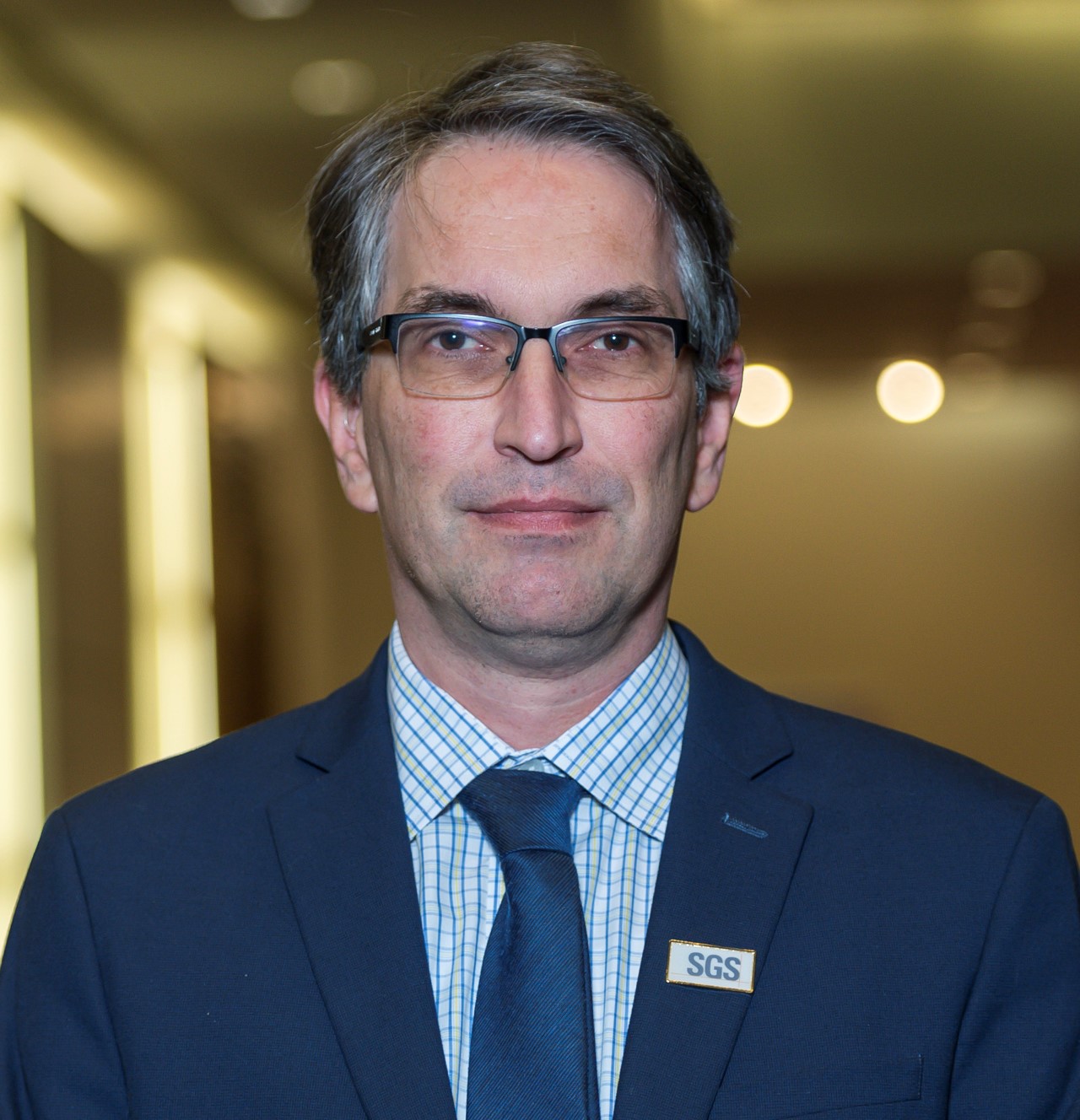
Alexander Seyfarth is an x-ray spectroscopist with over 30 years of experience with XRF and XRD. Alexander holds a Diploma in Mineralogy from University Giessen (1996). Thesis work for his graduate studies was done on chemical and phase investigation of kiln deposits using XRF, EPMA, and XRD as well as Rietveld structure refinement on isolated phases.Starting out as Application Scientist in Germany with Siemens, he was transferred to the US where is now a proud citizen, still living in the Midwest (Wisconsin). As the resident “Geo Scientist” he got to travel within the Americas to mine sites, cement plants and quarries and present application and theory based talks at trade shows, conferences for Bruker and Thermo Fisher Scientific in various functions.(1997-2016). With a group of other XRF trainers he continued the XRF course from University of Western Ontario and moved it to Hamilton College and now merged it with the ICDD training offering in the advanced XRF course; This is the only non vendor based class room course in North America for XRF spectroscopy.Alexander is associated volunteer researcher with the Colorado School of Mines covering calibrations for direct core scanning with ED-XRF. Since 2017, he is back full time to the geochemistry world as Global Technical Manager for XRF (and other X-ray technologies) with SGS Natural Resource Division and active in both SGS internal technical formation as well as externally with focus on the new and smaller devices such as PXRF and Micro Libs.In 2026 he was elected as Vice President to the Association of Applied Geochemists (AAG) and chairs the strategic plan committee.Professional interest lies within research, promoting and expanding XRF and XRD within the community as well as modern Gamma activation analysis for Gold as saying. Data fusion of chemical and mineralogical assays as well as advancing the Chemometric based methods are part of the current research with vendors.Focus for AAG work is on the training and education of future geochemists as well as promoting and establishing best practices for “new” types of instrumentation leveraging the extensive contacts to the various instrument vendors.Other Associations are with SME, IAGS and ACS.
Professor Seyfarth's keynote will review fire assay as the long-standing standard for gold analysis, and introduces modern high-energy X‑ray spectroscopic methods—gamma activation analysis and PhotonAssay™—as advanced alternatives alongside XRF. He will highlight PhotonAssay’s ten key advantages over traditional fire assay, including larger representative samples, operator independence, lead‑free operation, lower carbon footprint, high throughput, full automation, and compatibility with coarse materials, delivering results equivalent to FAAS for most gold ores.