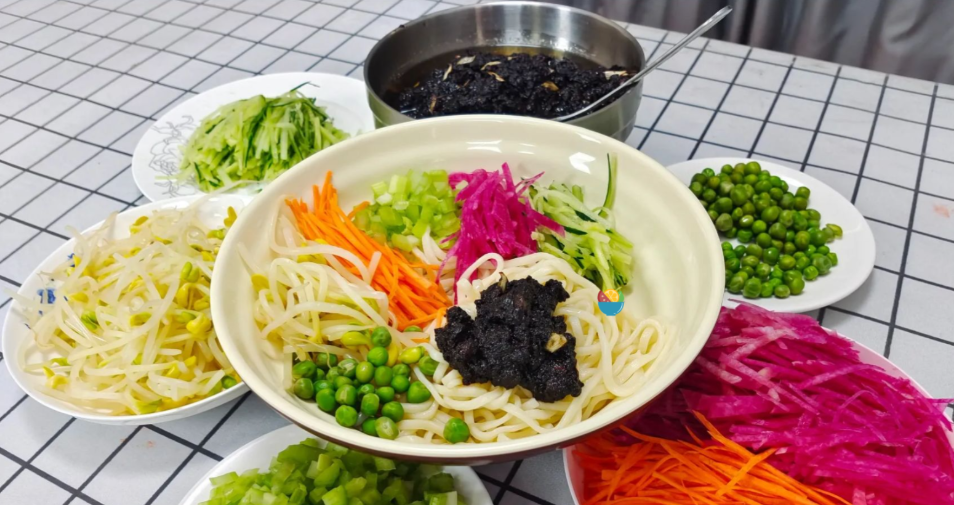

Old Beijing Noodles with Fried Bean Paste (Zhajiangmian)Old Beijing Zhajiangmian is a traditional snack of Beijing cuisine, widely popular in the Beijing-Tianjin-Hebei region. The dish features noodles as the main ingredient, tossed with fried bean paste and an assortment of seasonal vegetable toppings . Its core sauce is made by stir-frying diced pork belly (with a balance of lean and fat) with dry yellow soybean paste and sweet bean paste, then simmered over low heat to form a deep brown, aromatic paste . The noodles, typically hand-pulled or machine-cut, are boiled and often rinsed in cold water to maintain a chewy texture .
The vegetable toppings, known as "caima," include shredded cucumber, soybean sprouts, and shredded pink radish, among over ten seasonal varieties adjusted throughout the year . It is traditionally served with Labo garlic (garlic pickled in vinegar on the eighth day of the twelfth lunar month) and Labo vinegar . The rich, savory flavor of the sauce stems from the traditional "small-bowl dry-frying" technique, which emphasizes separating oil from the paste and slow simmering over gentle heat .
As an iconic symbol of Beijing’s food culture, Zhajiangmian reflects the everyday life of the city’s historic alleyways (hutongs). Its lavish presentation, often described as "seven plates and eight bowls" (qī dié bā wǎn), highlights the regional culinary emphasis on variety and harmony . Nutritionally, the dish is high in carbohydrates and protein, but its sodium content (due to the bean paste) should be noted by those with dietary restrictions.