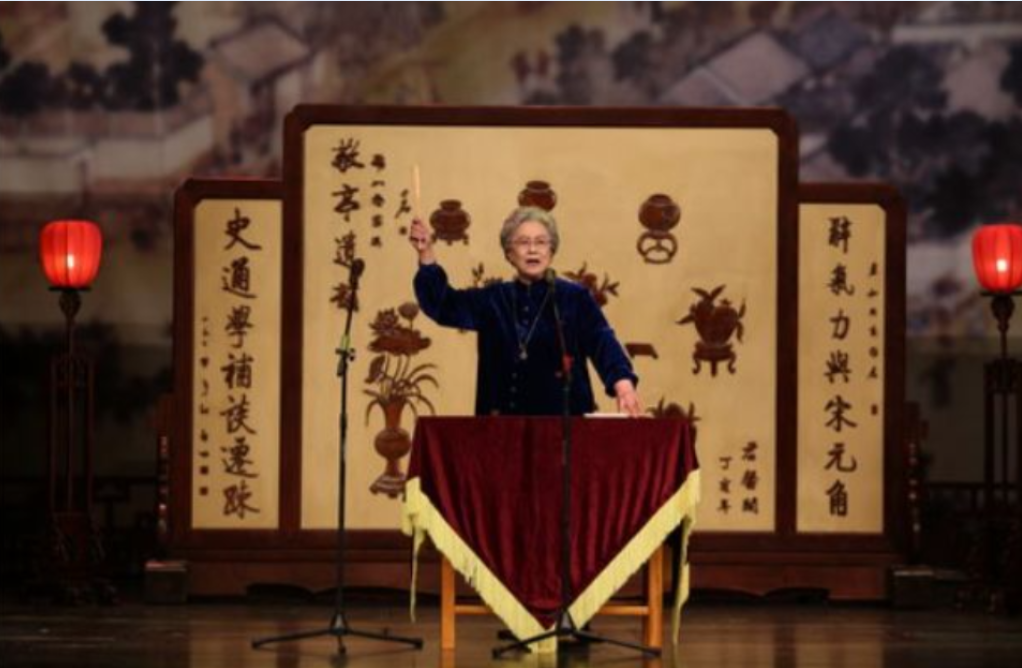

Beijing Pingshu (Beijing Storytelling) is a traditional Chinese oral performing art based on standard Mandarin. Its origins can be traced back to the Spring and Autumn Period, taking shape during the late Ming and early Qing dynasties, solidifying in the late Qing and early Republic of China period, and reaching its peak in the 1930s and 1940s. It is highly popular in Beijing, Tianjin, Hebei Province, and Northeast China .
The performance typically features a single storyteller. Traditionally, a table and a chair are placed on the stage, with three essential props on the table: a wakewood (xingmu, used for emphasis), a folding fan, and a handkerchief. The performer sits while narrating. However, some modern artists choose to perform standing without using any props or furniture . Representative works include "Romance of the Three Kingdoms" (Sanguo Yanyi) and "Generals of the Yang Family" (Yangjia Jiang) .
In 2008, Beijing Pingshu was inscribed onto the second batch of Beijing Municipal-Level Intangible Cultural Heritage lists, with the heritage serial number Ⅴ-57 .